July News: NAWM

rick.savage • July 1, 2024

Greetings Wetland Supporters,


I attended the National Association of Wetland Managers (NAWM) conference at the National Conservation and Training Center near Shepherdstown, WV. I have always said that this annual conference is one of the best to attend because of its relevance and timeliness to wetland professionals. There were really great presentations and you can see the agenda here.


I was also invited to participate in a panel discussion on the Benefits of Regional, State, and Tribal Wetland Working Groups. I talked about our partnerships with stakeholders to help them find solutions to their flooding problems (e.g., Stony Run, Parkers Creek, Lumbee Cultural Center, the Gullah-Geechee), our partners with the Volunteer Wetlands Monitoring Program (NC State University, RTI International, and the Partners for Environmental Justice dealing with Walnut Creek. I also talked about our involvement in state initiatives including the (NC) Natural and Working Lands Initiative and the NC Salt Marsh Action Plan.


Also on the panel was Tracy Hames, the Executive Director of the Wisconsin Wetlands Association, and he discussed a wetland workgroup that included state legislators, members from the governor’s office, realtors, homebuilders, wetland scientists, and members of the interested public. This group discusses wetland issues such as protection, given the Sackett case. And because of the diversity of the group, the Wisconsin legislature and governor passed legislation to provide greater protection for wetlands. I talked extensively with Tracy and Erin O’Brien (also of Wisconsin Wetlands Association) about this workgroup and how we might implement one in NC. So stay tuned.


I had several good conversations and one in particular was with Molly Martin from EPA Region 4. She is very excited about our new Wetlands Program Development Grant to expand our Volunteer Wetlands Monitoring Program. Another good conversation was with Andy Robertson of Saint Mary’s University. He was estimating wetland protection loss for the state of New Mexico and he said that as much as 85% of the wetlands would lose their protection.


Just remember the Carolina Wetlands Association is still working on ways to reverse the loss of wetland protection in the Carolinas. One thing you can do is write or call your state representatives and tell them we need to protect our wetland resources. And consider making a donation to help us continue the fight for our wetlands.


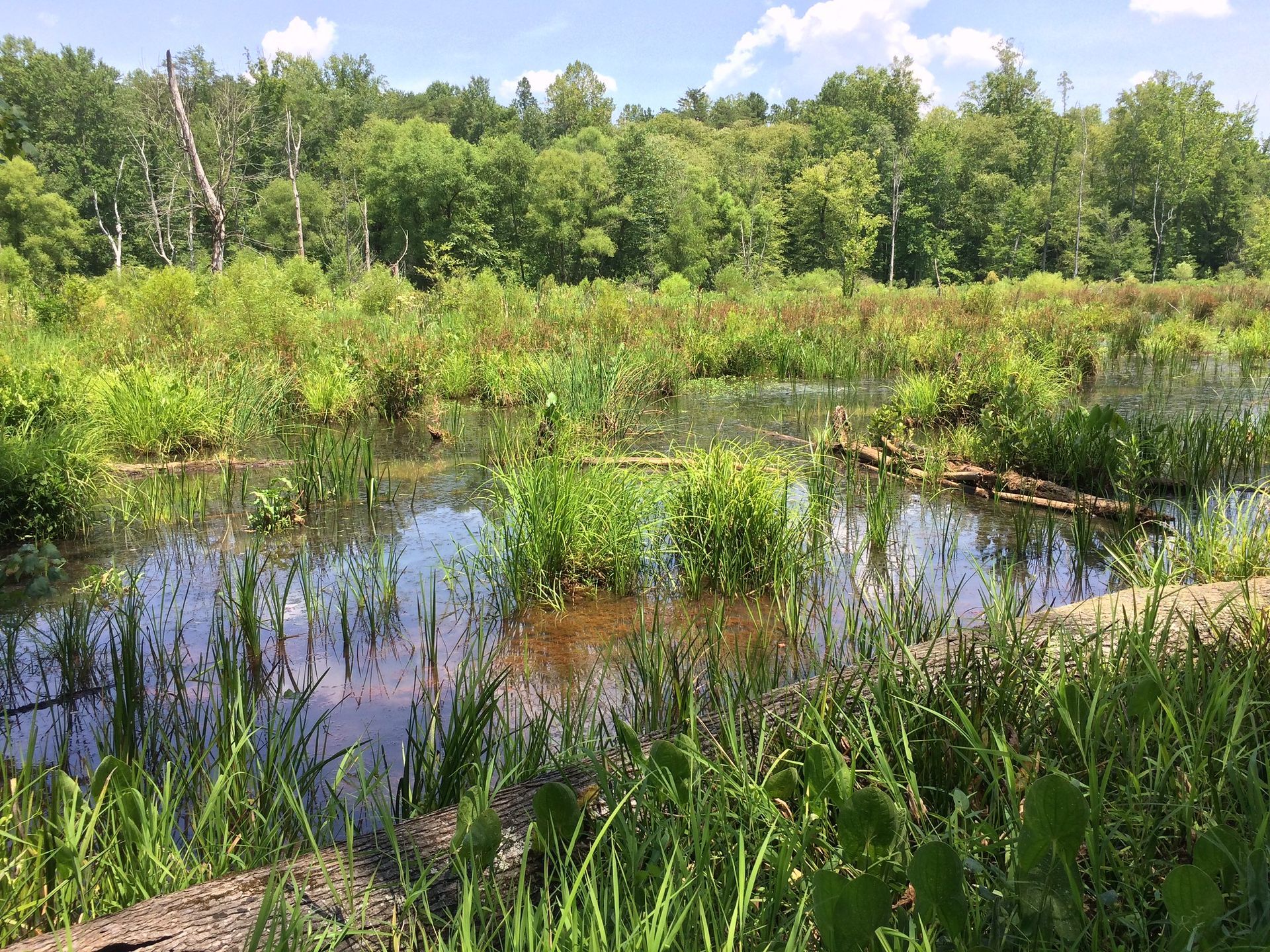
So when exploring a wetland, think about what you can do to help make sure your wetland is

protected.


Rick Savage, Executive Director

You might also like

Celebrating Our Carolina Wetlands
By rick.savage June 9, 2026
Hello Wetland Supporters, I hope everyone had a wonderful American Wetlands Month in May and found an opportunity to get outside and explore a wetland. We enjoyed fantastic paddling events at Robertson Millpond Preserve and Lake Mayo, where participants experienced the beauty and importance of these unique ecosystems firsthand. Wetlands have also been in the news recently as the impacts of recent Supreme Court decisions on wetland protections continue to be evaluated. Two recent articles highlight what is at stake: Lisa Sorg in Inside Climate News, Supreme Court’s Limitation on Wetlands Protection Will Make Flooding Worse Jesse Gourevitch and Adam Gold, New Research Shows What’s at Stake When Wetlands Disappea r The central message of both articles is clear: the loss of wetlands leads to increased flooding and rising economic costs for communities. Research cited by Gourevitch and Gold found that wetland loss across the United States has increased residential flood insurance claim payments by an estimated $10.1 billion since 1985 — approximately 9% of all insured riverine flood losses nationwide. The authors also emphasize that policymakers must better recognize the economic value wetlands provide in reducing flood damage to homes and communities. According to the research, the flood-mitigation value of currently unprotected wetlands is estimated at $177 billion nationwide , with North Carolina accounting for approximately $4.6 billion of those benefits . This research reinforces what the Carolina Wetlands Association has long understood: healthy wetlands are essential infrastructure for resilient communities. Through support from the NC Land and Water Fund, Carolina Wetlands Association have received three grants to partner with vulnerable communities to assess flooding concerns and develop restoration plans that incorporate community input, scientific data collection, and hydrologic modeling to identify the most effective wetland restoration strategies. We are also excited to share that we recently received a fourth NC Land and Water Fund grant to begin our first restoration project at Stony Run in Harnett County. Stony Run Walkable Watershed Lumbee Cultural Center Wetland Restoration By working alongside communities and restoring wetland resources, we are helping reduce potential flood damage while also providing additional benefits such as improved water quality, recreation opportunities, shoreline stabilization, environmental education, and greater community resilience. So, the next time you explore a wetland, remember that healthy wetlands mean healthy communities — and your support plays an important role in protecting these valuable ecosystems. Wetlands truly do matter. Best, Rick Savage Executive Director
Kayakers
By aaron.ellis June 9, 2026
Wetland supporters enjoyed two memorable May paddling events, exploring North Carolina’s beautiful wetlands while spotting wildlife and learning from local experts.
PP
By kim.matthews May 7, 2026
May is American Wetlands Month - yes, an entire month to celebrate these ecologically diverse and economically important ecosystems. Wetlands account for 14% of the land area in North Carolina and almost 20% of South Carolina!